


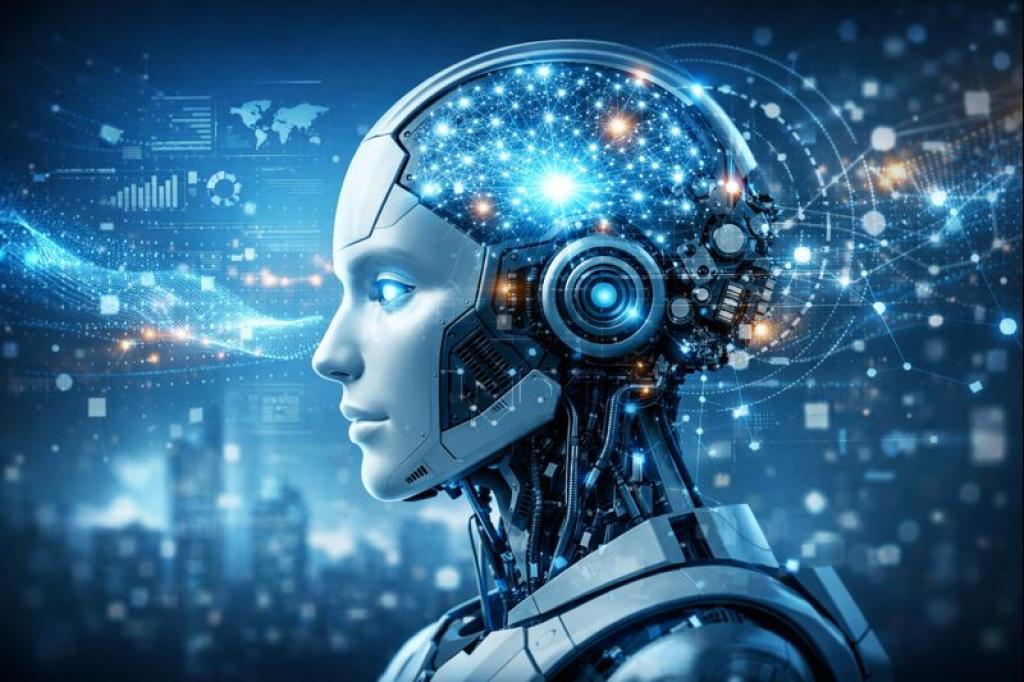
Artificial Intelligence (AI) has rapidly evolved from a theoretical concept into one of the most influential technologies of the modern era. Once limited to academic research and experimental applications, AI is now deeply integrated into everyday life, transforming industries, reshaping economies, and redefining the way humans interact with technology.
As we move further into the digital age, artificial intelligence is no longer a luxury or a future promise—it is a foundational pillar of technological progress. From smartphones and smart homes to healthcare systems and financial markets, AI continues to expand its influence across nearly every sector.
Table of contents [Show]
Understanding Artificial Intelligence
At its core, artificial intelligence refers to computer systems designed to perform tasks that traditionally require human intelligence. These tasks include learning, reasoning, problem-solving, language understanding, and decision-making.
Modern AI systems rely heavily on machine learning and deep learning, where algorithms are trained on vast amounts of data to recognize patterns, make predictions, and improve performance over time. Unlike traditional software, AI systems adapt and evolve, becoming more accurate and efficient as they process new information.
AI in Everyday Life
Artificial intelligence has become an integral part of daily digital experiences. Many users interact with AI-powered systems without even realizing it. Voice assistants, recommendation engines, facial recognition, and automated customer support are just a few examples of AI-driven technologies that have become commonplace.
Smartphones utilize AI to enhance photography, optimize battery usage, and improve user experience. Streaming platforms rely on AI algorithms to recommend personalized content, while navigation apps use machine learning to analyze traffic patterns and suggest optimal routes in real time.
These applications demonstrate how AI enhances convenience, efficiency, and personalization in everyday technology.
The Impact of AI on Major Industries
Healthcare
In the healthcare sector, artificial intelligence is revolutionizing diagnostics, treatment planning, and patient care. AI-powered systems can analyze medical images, detect diseases at early stages, and assist healthcare professionals in making more accurate diagnoses.
Predictive analytics powered by AI also enables hospitals to optimize resource management, reduce operational costs, and improve patient outcomes. As AI continues to evolve, its role in healthcare is expected to expand significantly.
Finance and Banking
The financial industry has embraced AI to enhance security, efficiency, and customer service. AI algorithms are used to detect fraudulent transactions, assess credit risk, automate trading strategies, and provide personalized financial advice.
Chatbots and virtual assistants powered by AI have also transformed customer interactions, offering instant support and reducing the need for manual intervention.
Cybersecurity
As cyber threats grow in complexity, artificial intelligence has become a critical tool in cybersecurity. AI-driven systems can analyze massive volumes of data to identify suspicious behavior, detect vulnerabilities, and respond to threats in real time.
By continuously learning from new attack patterns, AI enhances the ability of organizations to protect sensitive data and digital infrastructure.
Artificial Intelligence and the Workforce
One of the most debated aspects of AI is its impact on employment. While automation and AI-driven systems may replace certain repetitive tasks, they also create new opportunities and roles that require advanced skills.
Rather than eliminating jobs entirely, AI is reshaping the workforce by shifting demand toward roles involving data analysis, system oversight, ethical governance, and AI development. Organizations and educational institutions must adapt by investing in digital skills and continuous learning.
Ethical Considerations and Challenges
Despite its advantages, artificial intelligence presents significant ethical and social challenges. Issues such as data privacy, algorithmic bias, transparency, and accountability remain major concerns.
AI systems are only as unbiased as the data they are trained on. Without proper oversight, these systems can unintentionally reinforce discrimination or make decisions that lack fairness. As a result, governments, organizations, and developers are increasingly focused on establishing ethical frameworks and regulatory standards for AI deployment.
Ensuring responsible and transparent use of artificial intelligence is essential to building public trust and maximizing its benefits.
The Future of Artificial Intelligence
The future of AI is closely tied to advancements in computing power, data availability, and algorithm design. Emerging technologies such as generative AI, autonomous systems, and human-AI collaboration are expected to further expand AI’s capabilities.
In the coming years, artificial intelligence is likely to play a central role in addressing global challenges, including climate change, healthcare accessibility, and smart city development. Its potential to drive innovation and efficiency makes it one of the most important technologies of the 21st century.
Conclusion
Artificial intelligence is reshaping the technological landscape at an unprecedented pace. Its influence spans industries, transforms daily life, and challenges traditional approaches to work, security, and innovation.
As AI continues to evolve, the focus must remain on responsible development, ethical implementation, and inclusive growth. By embracing artificial intelligence thoughtfully and strategically, societies can harness its power to create a more efficient, innovative, and sustainable future